Company
Why we built EquiCore
You're trusting a software company with the records of vulnerable clients. You should know who we are and where this came from.
Founder story
Daryl Fletcher, Founder & CEO
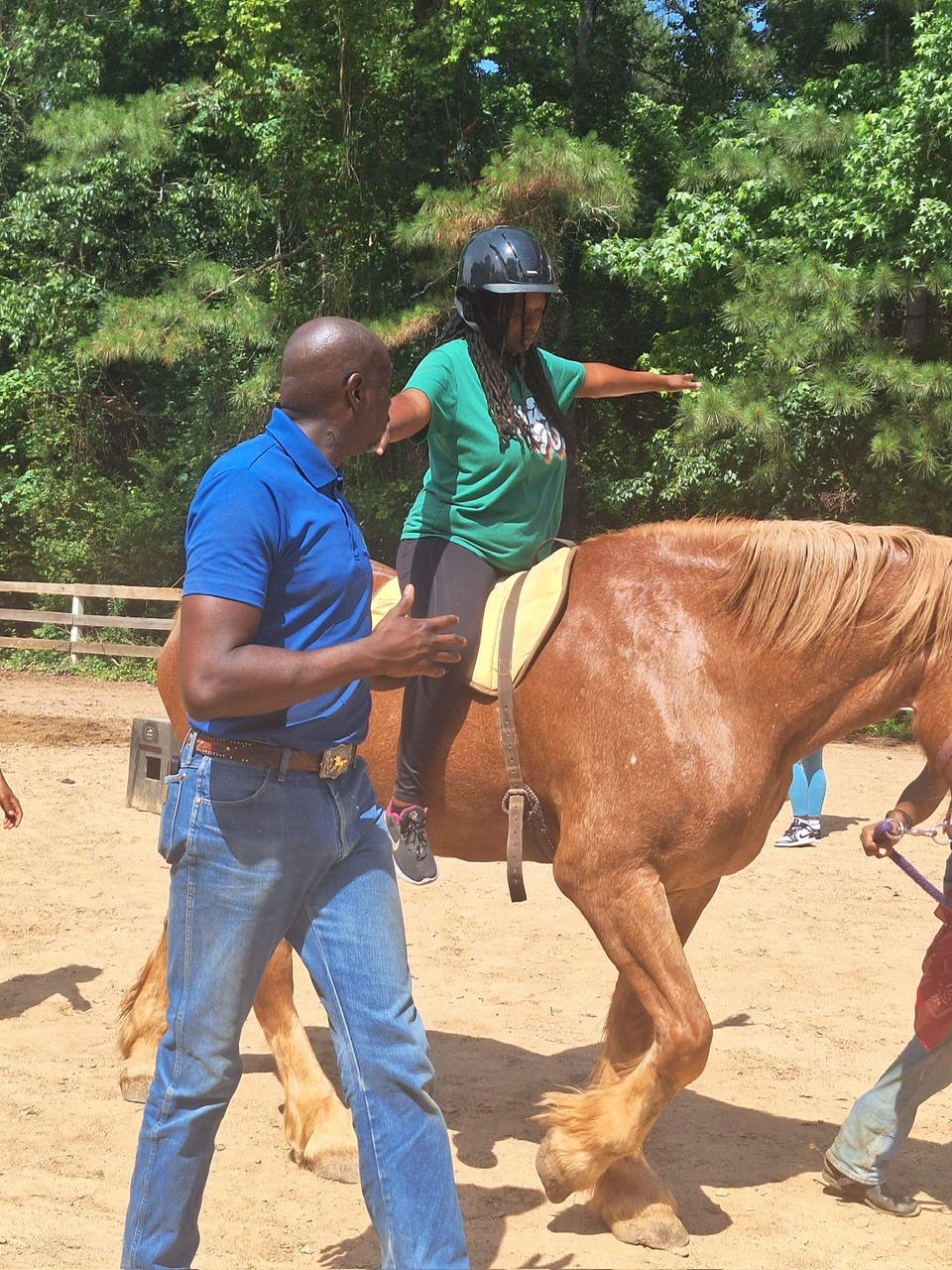
I didn't come to this from software. I came to it from the round pen. I'm an ESMHL certified practitioner and the founder of SOOFA Ranch — Stretch Out On Faith Again Ranch — a 501(c)(3) equine assisted services nonprofit serving Metro Atlanta.
What I kept seeing was hard to sit with. A kid who couldn't stay in a room for ten minutes in March is leading a 1,200-pound animal through an obstacle course in June. The change is unmistakable to everyone standing there. And then the grant report comes due, and all any of us can offer is a story and a headcount.
Good work in this field goes undocumented and underfunded — not because practitioners are careless, but because the tools were never built for us. General EHRs don't know what a groundwork session is. Spreadsheets don't hold a baseline. So the proof lives in a practitioner's memory, and the funding goes somewhere it can be measured.
I built EquiCore to fix that from the inside: a system that captures a baseline, tracks change session by session, and turns it into a report a funder or a school district will actually accept. Not to make this work look more clinical than it is — to make it as visible on paper as it already is in the arena.
Credentials
- ESMHL certified equine specialist in mental health and learning
- Founder, SOOFA Ranch — 501(c)(3) EAS nonprofit, Metro Atlanta
- Active practitioner: EquiCore is used on a live caseload every week
Mission
We believe the work happening in arenas and round pens deserves the same credibility as work happening in clinical offices.
EquiCore exists to make that possible.
Design partner
Built alongside a working program
SOOFA Ranch is EquiCore's design partner and first production customer. That isn't a marketing arrangement — it's how the product gets specified.
Every feature is tested against a real nonprofit's real documentation and funding needs before it ships: actual intake paperwork, actual session volume, actual grant deadlines with actual money attached. If a workflow slows a practitioner down on a cold morning with three clients scheduled, it doesn't survive.
It also means we say no to things. Features that look impressive in a demo but create documentation burden don't make it into the release.
SOOFA Ranch — Youth Program Outcomes
38
Clients served
+41%
Avg. gain
412
Sessions
Talk to the practitioner who built it
Demos are run by people who document EAS sessions themselves. Ask the hard questions.